

Why Corporate Training Videos Are Essential for Modern Workplaces
The way we learn in the modern workplace is forever changed. No longer will you spend eight hours sitting in a dusty room. Today, companies depend on corporate training videos to bridge the gap between information and understanding.
As our attention spans get shorter and our schedules get busier, video has become the new gold standard for efficiently communicating knowledge. We cannot ignore the importance of video-based learning in modern workplaces. With so much remote work these days, a video acts as a consistent teacher that can reach an employee in London, New York, or at home.
This shift isn't just about convenience. It is about results. And speaking to how training videos affect employee performance and retention, the data shows that visual learning leads to better information retention and a stronger connection to their company.
What Are Corporate Training Videos?
Corporate training videos are instructional materials that help companies explain a concept. These short videos use a combination of moving images, sound, and, at times, on-screen text to explain a topic.
Corporate video training aims to guarantee that every employee receives the same high-quality instruction. These videos, whether "Welcome to the Team" videos or complex tutorials on new software, serve as a permanent resource that staff can return to whenever they feel stuck.
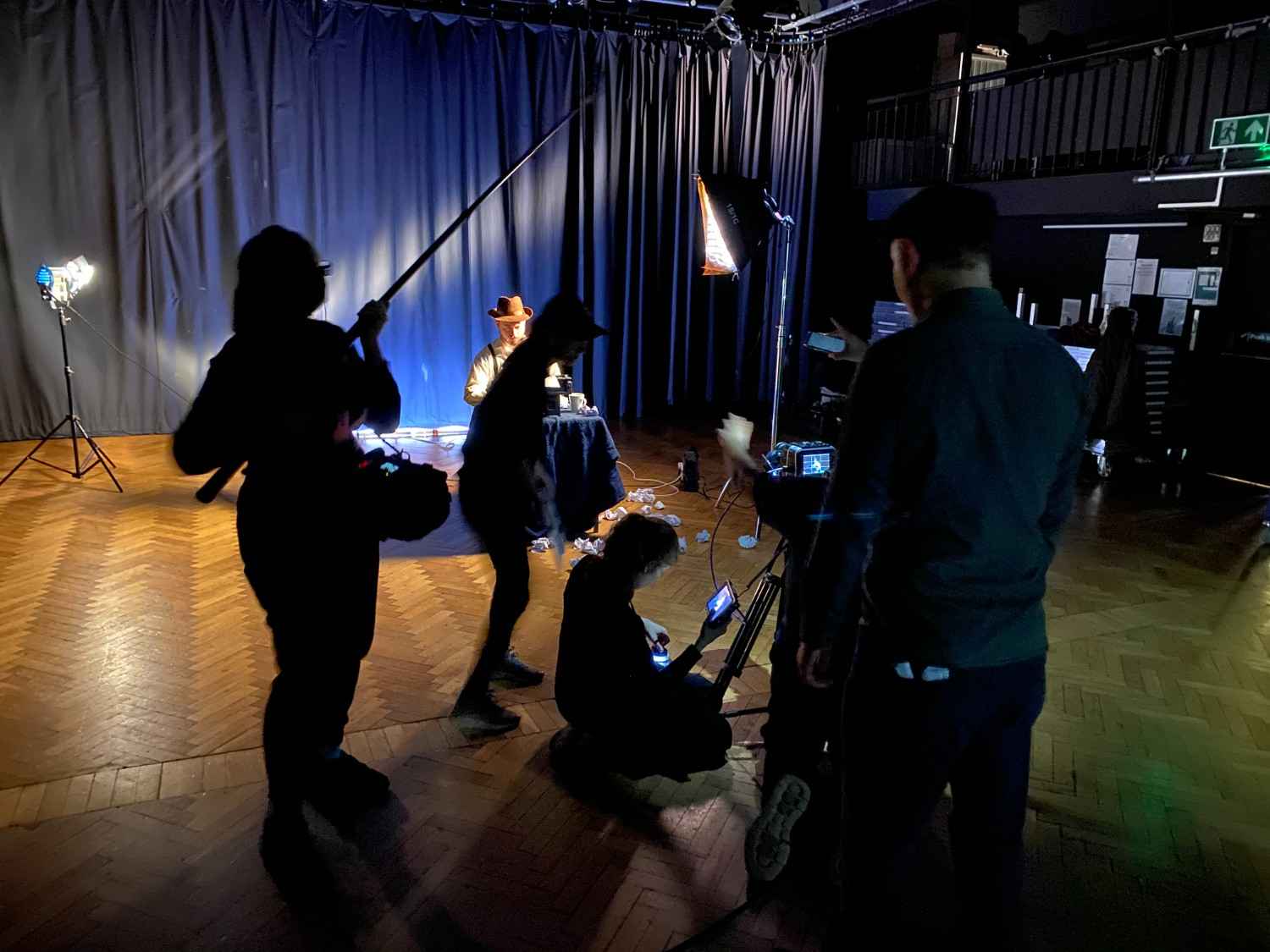
Types of Corporate Training Videos
Before you can use this tool, you need to know how many styles are available. One size doesn't fit all when it comes to lessons.
- Onboarding Videos: These familiarize new hires with the company culture and vision.
- Safety and Compliance: A vital necessity for industries such as construction or healthcare to guarantee everyone stays on the right side of the law.
- Product Demos: Training sales teams on how to use a new product to get them selling it more effectively.
- Soft Skills Training: Using actors to show how to deal with a difficult customer or how to lead a meeting.
- Screencast tutorials: A video recording of your computer screen that walks your employees through how to use internal software.
How Corporate Training Videos Improve Employee Performance
Performance is about how well an employee can perform and how quickly. Video speeds this process smoothly. When an employee watches a video, they are engaging both their eyes and ears. This approach results in much higher "retention of knowledge" than simply reading a book.
Because videos can be paused and replayed, one employee can learn a task at their own pace. This reduces the "fear of failing" that can occur during live training. People who feel competent in their skills tend to work more quickly and make fewer mistakes. At this level, you have a direct connection between corporate video training and high-level performance.
How Training Videos Improve Employee Retention
Employee retention is when your employees don't quit. An "unprofessional" and "boring" training program is one of the top reasons people leave jobs, as they feel they are not growing.
Investing in corporate video production shows the staff that the company cares about them and their growth. The videos are high-quality and make learning enjoyable rather than a task. When employees feel they have the tools they need to succeed, they are much more likely to stay loyal to the company. Training is the path to career progression and a key driver of talent retention in a business.
Key Benefits of Corporate Training Videos for Businesses
- Cost-Effectiveness: You pay for the production once and can train thousands of people.
- Consistency: All employees receive the same message. No more "bad trainers" ruining the message.
- Flexibility: Employees can learn when they want, even during their most productive hours.
- Analytics: Modern platforms now let you see who watched the video and whether they passed or failed the quiz at the end.
Best Practices for Creating Effective Training Videos
You should not simply hit record and hope for the best to get the best results. Corporate video production takes a little strategy:
- Make It Brief: Videos should run around 3 to 7 minutes. This is called "micro-learning."
- Focus on One Topic: If you try to teach everything in one video, nobody will learn anything.
- High-Quality Audio: A blurry video is also forgivable, but bad sound will make them turn off the video.
- Use a Script: Professional scripts will prevent you from wasting time with "ums" and "ahs."

Real-World Examples and Use Cases
To better understand, let's look at some examples of corporate training videos.
- Microsoft: This company uses video to boost its in-person training, reducing the cost per learner from $320 to $17.
- IBM: IBM began by switching to video-heavy learning, only to discover that employees learned five times more material in the same amount of time.
In the medical field, surgeons view high-definition videos to practice new robotic surgical techniques before even physically operating on a patient. In the finance world, banks instantly explain complex new anti-money laundering laws to thousands of global staff via animated videos. The above corporate training video examples show that no matter the industry, video is effective.
Detailed Case Studies and ROI
- Global Retail Chain: Despite being a well-known retail brand, it encountered a 60% turnover rate among new hires. They understood how the manual-based onboarding felt like a lot of work. They invested in a series of the best corporate training videos that leveraged storytelling. In just one year, they increased their retention rate by 25%. The millions of dollars it saved on hiring and re-training were the return on investment (ROI).
- Tech Support Firm: The tech support firm has a high count of "repeat errors" in their server rooms. They authored short, 2-minute corporate training videos embedded in QR codes on the server racks. Errors decreased by 40 percent.
Exploration of Interactive Video Content
The future of learning is not passive observation. It's active doing. These interactive videos allow the viewer to choose. For instance, one video might show a customer becoming angry. The video pauses and asks the employee, "What do you need to do next? A, B, or C?"
The video then plays the consequences of that choice. Branching narrative is among the best corporate training video formats, as it lets your employees practice in a safe space. It makes a passive experience an active one.
Latest Technological Tools
New tools have made corporate training video creation even easier. Here is the list:
- AI Avatars: Tools like AI Avatars let you generate a "talking head" video by simply entering text.
- VR (Virtual Reality): VR can help with dangerous jobs. Training videos give the employees a chance to work in a 360-degree digital world.
- LMS Integration: Modern Learning Management Systems (LMS) can now even tell you the precise percentage of a video each student watched.
Industry-Specific Applications
- Tech: Quickly teaching new coding languages or security protocols.
- Finance: Simplifying tax laws and compliance updates.
- Healthcare: Illustration anatomy or at the patients' bedside.
- Manufacturing: Operating heavy machinery where a single misstep could be very dangerous.
Common Challenges and How to Overcome Them
We all know the biggest challenge is the initial cost. High-end corporate video production can be expensive. But if you compare the cost of sending a trainer all over the country to the actual price, the price is way lower.
Another issue is keeping content "fresh." The video may become outdated as your software changes. The answer is to make "modular" videos — short clips that can be replaced without re-shooting the whole series.
Future Trends in Corporate Training Videos
Watch out for Augmented Reality. In recent years, an employee will put on glasses that will run a video tutorial directly above the physical machine they are trying to fix. Other variants will include more "Social Learning", where employees will record and share their "tips and tricks" videos with their peers, creating an album of our own knowledge.
Conclusion
For companies that want to grow, video-based learning has become a necessity. Using corporate training videos, companies can build confident teams that stay longer. The advantages are obvious — speedier learning, fewer errors, and higher payoffs. Corporate training videos are meant to teach and create a strong work culture.
Professional corporate video production can provide ultimate results for businesses. It transforms simple training into engaging learning experiences.
Simply Thrilled is an award-winning creative agency focused on storytelling and utilizing data insights to produce amazing training videos. Our videos are engaging and interesting, increasing performance and retention. Partner with Simply Thrilled to level up knowledge, performance, and training. Contact us today so we can help you!
FAQs
1. How long should an ideal corporate training video be?
Generally, most experts recommend keeping individual videos between 3 and 7 minutes long. This is called "micro-learning." If your topic is long, it's best to split it into a series of short videos instead of making a long, drawn-out video.
2. Is video training more expensive than hiring a live speaker?
Initially, the production costs may appear higher. But when you consider that one video can pay dividends for years to thousands of employees with no extra travel or venue cost, it becomes much more cost-effective over the long run.
3. Can we use animation instead of real people in our videos?
Yes! Animated corporate training videos are great for explaining abstract concepts, software, and sensitive topics where having a human actor might feel too "rehearsed." Updating animation is often easier to update later as well.
.jpg)
.jpg)
.webp)


