

What’s the Difference Between Film and Video?
Film or video? The two get used interchangeably all the time. Truth is, they are quite similar in many ways, but the subtle differences shape everything: budget, crew, script, run-time, and the finished piece. Miss those and you'll end up with an overblown film when a snappy video was needed, or a thin corporate video when the moment called for real cinematic weight. Here's the honest breakdown, straight from a working video production agency.
What is the technical difference between film and video?
The technical difference sits in how moving images are captured. Film uses celluloid, a strip of light-sensitive plastic run through a projector at 24fps. Video is a signal that is recorded digitally, straight to a memory card, no chemical processing needed.
Most modern filmmakers now shoot on a digital cinema camera and colour-grade to mimic celluloid. Only a handful still shoot on film reels: 35mm usage dropped to just 24 major studio films in 2018, and film stock production is now down to Kodak alone. Video has lived in digital formats from the start: videotape, VCR, DSLR, mirrorless, phone.

Crew Size
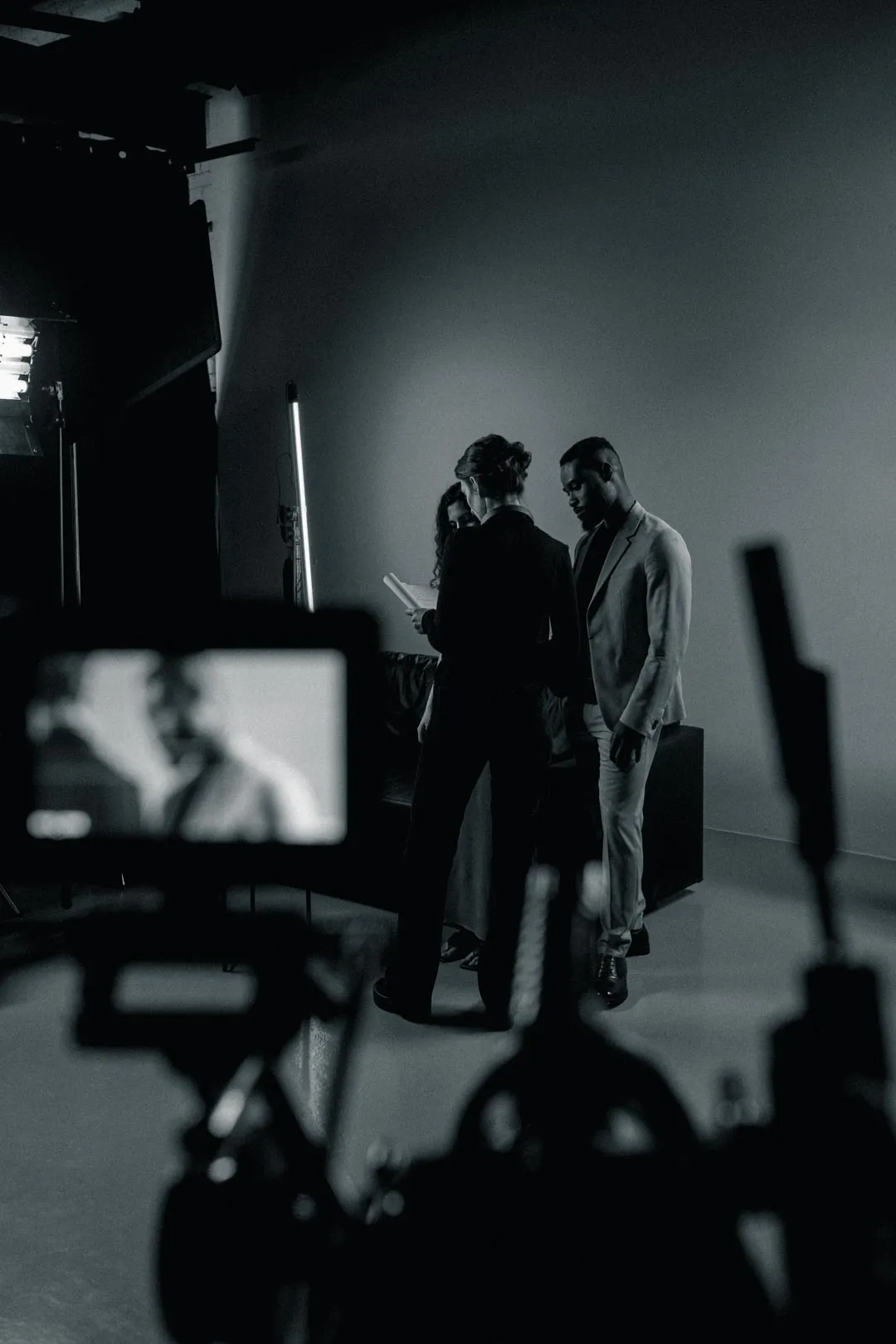
Films need a lot of hands. Even on a small scale, film and TV production companies bring in a large team of people to help produce them, which is why the credits often seem to roll on forever.
Video production works with small teams. A tight crew can cover corporate videos, testimonials, or social ads without a drop in quality, thanks to modern video and audio recording technology.
Script Length
Scripts for films are elaborate undertakings, constantly edited across drafts, especially feature films where a single line gets reworked a dozen times before it lands on set.
Video scripts are simple and straightforward. Once the video script is written, very few changes are made. Words uttered on camera may also be unrehearsed. Sometimes there's no spoken script at all: teams add text to the video during the editing process. Perfect for social feeds, where most viewers scroll with the sound off.
Location Size
Films and TV productions are usually shot in at least three different locations, though computer-generated graphics have cut the location hopping. Video production is far more contained. The whole shoot can often be accomplished in a single location like a studio, warehouse, or office. That's a big reason corporate videos for marketing come in at a fraction of the film production cost.
Target Audience
Videos and films have different audiences because they are made for different purposes. Film production is mostly done for entertainment. Videos are meant to express opinions, introduce a business, promote a product, give instructions, and supply information. A film wants you to feel something for two hours. A video wants you to do something in thirty seconds: click, buy, sign up, book a call.
Shooting Medium: film reels vs digital
Most videos are shot using digital video, since it delivers strong quality and remains a budget-friendly form of visual media production. Movies may also be shot using digital, but a small group of big-budget filmmakers still choose celluloid for its grain. Today, digital cinema cameras shoot in 4K and rival Super 35mm film scans, so the choice is now about mood, not quality.
Scale, Money and Time
Videos are short. Films are long. A video usually runs 3 to 30 minutes. A feature film runs 1 to 3 hours. More minutes on screen means more of everything: shoot days, locations, people, money. Films require far more investment than a short video. A feature can take months or years. A video production project moves from brief to delivery in a week or two.
How the Digital Revolution Has Shaped Both Film and Video Mediums
The digital age didn’t just knock on the door-it booted it open with a 4K camera in hand. The arrival of digital technology has levelled the playing field for video production, making it faster, cheaper and ridiculously more flexible.
While traditional films once lived and breathed celluloid, today even big-budget blockbusters are flirting with digital formats. But video? It’s been living in digital from the get-go. Whether you're shooting on a DSLR or your mate’s iPhone, modern video gear allows small teams (or even solo creators) to create slick, professional-looking content - without needing a Hollywood-sized wallet.
Use Cases Across Different Industries
You're in healthcare. A video is your go-to for an explainer on surgery prep. A film? That's a documentary diving into a patient's emotional journey. Video production is fast and functional. Film production is longform and layered.
- Education: Videos simplify learning. Films spark empathy or change.
- Marketing: Video ads are short, punchy, purpose-driven. Films are cinematic brand stories.
- Healthcare: Videos train staff or inform patients. Our NHS England project blended film craft with a clear health message.
- Events: Video recaps the buzz. A film retells the story, characters and all.
Why Understanding the Difference Between Film and Video Matters Today
In the age of YouTube, Netflix, and TikTok, attention spans are shorter than ever. A brand film might be beautiful but wasteful if what you need is a scroll-stopping 30-second social video. Flip it and a promotional video won't cut it if you're aiming for Cannes. Getting the difference between film and video right saves time, saves money, and gets the reaction you're after. If you're weighing up your options, our guide to repurposing video is a good next read.
Ready to Get Rolling?
If you need a video that actually gets watched not just uploaded and forgotten hit up Simply Thrilled. We’re the UK’s video production gang with ideas louder than a rock concert and sharper than a lens flare. From quirky brand films to business bangers, we’ve got you.
Whether it’s a punchy brand video or a full-blown story with heart, we’ve helped brands rack up over 50 million views and land on screens from Sky to the BBC. If you’re after fresh ideas, fast turnarounds, and a team that gets it. Ready to shoot to thrill? Talk to our video experts.
.jpeg)
Frequently Asked Questions
1. Are film and video the same thing?
No, but they're often used interchangeably. Both refer to moving images, but film usually means celluloid-based motion picture work, while video is a digital signal recorded and delivered on screens of every size.
2. Is film better than digital video?
Neither is better. Celluloid has grain and softer highlights many directors love. Digital cinema cameras give sharper detail and a smaller bill. Most big-budget filmmakers now shoot digital and grade it to feel filmic.
3. What is 24 frames per second and why does it matter?
24 frames per second has been the cinema standard since the late 1920s. It produces a slight motion blur our eyes read as cinematic, which is why even digital films still shoot at 24fps.
4. How long does video production take compared to film?
A video production project runs from brief to delivery in a week or two. A feature film can take months or years.
5. Should my business hire a film or video production company?
For nearly all business content (ads, explainers, testimonials, social, training), a video production company is the right call. Film production only fits when you're making longform brand cinema or scripted entertainment.

.jpg)


